A Comprehensive Evaluation of the Bill Tracker Journal Interior Template
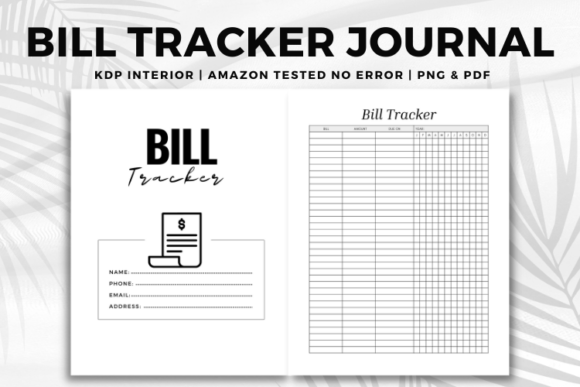
For individuals looking to manage their finances with greater clarity and control, a structured tool can make a significant difference. The Bill Tracker Journal Interior represents a digital template designed to facilitate this process. It is a pre-formatted document intended for use as the interior pages of a physical journal or planner, specifically focused on tracking bills, payments, and related financial details. Evaluating this product requires understanding its specifications, potential applications, and how it compares to other methods of financial organization.
Core Specifications and What You Receive
The provided Bill Tracker Journal Interior is a digital file package. Key details include a page size of 8.5 by 11 inches, which is the standard US letter format, and a total of 110 pages. The files are delivered in multiple formats: a PDF, a PNG file, and an editable PowerPoint (PPTX) file. The product is described as having no bleed, meaning the content is confined to the standard page area without extra margins for printing trimming. It is advertised as high-resolution and tested on Amazon Kindle Direct Publishing (KDP) with no errors, ready for upload as a PDF. This combination of formats aims to offer flexibility; the PDF and PNG are for immediate use, while the PPTX file allows for customization before finalizing your journal.
Potential Reasons for Interest and Key Benefits
Individuals might be interested in this Bill Tracker Journal Interior for several practical reasons. Primarily, it offers a ready-made structure, eliminating the need to design a tracking system from scratch. For someone publishing a physical planner via a service like Amazon KDP, a pre-tested interior file can streamline the production process and reduce formatting errors. The editable PPTX file is a significant feature for those who wish to personalize the layout, fonts, or categories before printing or digital use.
The main benefits revolve around organization and efficiency. A dedicated tracker can consolidate bill due dates, amounts, payment statuses, and account information in one consistent location. This can reduce the mental overhead of managing disparate reminders and statements, potentially helping to avoid late payments and improve overall financial awareness. The use of a physical journal, as opposed to purely digital apps, might also appeal to users who prefer tactile note-taking or want a secure, offline record of their finances.
Important Tradeoffs and Considerations
While the template offers structure, users must consider several tradeoffs. The 8.5x11 inch size is quite large, more akin to a notebook or workbook than a portable pocket journal. This may be less convenient for daily carry but could be suitable for a home finance reference binder. The 110-page count is fixed; you cannot add or remove pages from the PDF without editing the source file. If your bill tracking needs are minimal, many pages might go unused.
A critical consideration is the level of customization required. While an editable PPTX file is provided, modifying it effectively requires familiarity with Microsoft PowerPoint or similar software. Users without these skills or who desire immediate use might rely on the static PDF or PNG, accepting the preset design. Furthermore, the product is an interior template only. It does not include cover designs, binding instructions, or physical printing services—it is purely the content pages.
Situations Where This Interior is a Strong Fit
The Bill Tracker Journal Interior template aligns well with specific goals and projects. It is a strong fit for:
- Self-Publishers on Amazon KDP: Individuals creating a physical bill tracker journal to sell or use personally benefit from the ready-to-upload, tested PDF format, which minimizes technical hurdles.
- Users Seeking a Comprehensive Physical System: Those who prefer a centralized, at-home financial ledger and need a structured starting point will find the predefined pages helpful.
- Customizers with Basic Design Skills: People who want a tailored tracker but lack advanced graphic design ability can use the straightforward PPTX file to make adjustments.
In these scenarios, the template acts as a practical foundation, saving time on layout design and ensuring print-ready quality for publishing.
When Alternatives Might Be Worth Considering
Alternatives to this specific Bill Tracker Journal Interior should be evaluated depending on user needs. For those prioritizing portability, a template with a smaller page size (like 6x9 inches or A5) might be more suitable. If the 110-page structure seems excessive, simpler, free printable PDFs available online could suffice for basic tracking.
Perhaps the most significant alternative category is digital finance apps and software. Programs like spreadsheets (Excel, Google Sheets), dedicated budgeting apps (Mint, YNAB), or even calendar reminders offer dynamic features, automatic calculations, and synchronization across devices. These digital tools are inherently more flexible and can handle complex data without the constraints of a fixed page count. If your primary need is rapid calculation, data analysis, or mobile access, a digital solution may be more effective than a static physical journal interior.
Finally, for individuals who enjoy complete creative control and have advanced design skills, starting from a blank document in professional publishing software might yield a more personalized result than modifying a provided PPTX template.
Practical Decision-Making Insights
To determine if this Bill Tracker Journal Interior aligns with your goals, ask yourself these practical questions:
- Is my primary output a physical, printed journal, especially for KDP publishing?
- Do I value a pre-formatted structure over building my own from scratch?
- Is the 8.5x11 inch page size compatible with my intended use (e.g., home binder, large planner)?
- Do I have the ability and desire to customize a PowerPoint file if needed?
- Am I seeking an offline, non-digital method to complement or replace app-based tracking?
If most answers are yes, this template is likely a helpful resource. If you find yourself needing more dynamic features, extreme portability, or a simpler free solution, then exploring the alternatives mentioned would be a prudent next step. The decision hinges on balancing the convenience of a ready-made print template with the specific functional and format requirements of your personal or project-based financial tracking system.
Final Expectations and Outcome
Ultimately, using the Bill Tracker Journal Interior should lead to a functional set of pages for a physical financial journal. Expect to receive digital files that require your action: either direct upload to a publishing platform, printing for personal use, or customization before finalization. It will not manage your bills automatically; it provides the framework for you to manually record and oversee them. Its success depends on your consistent use of the journal it helps create. By carefully weighing its structured format against your need for flexibility and portability, you can make an informed choice on whether this template serves as the right foundation for your bill tracking and financial organization needs.