The Audition Log Book: Your Definitive Organizer for Performance Tracking
If you’ve ever juggled multiple audition calls, callback emails, and feedback notes, you know the chaos that can ensue. The Audition Log Book is designed to cut through that clutter. It’s not just a notebook; it’s a structured, professional system for tracking every aspect of your audition journey. At its core, it provides a centralized place to log dates, roles, casting directors, outcomes, and your personal reflections—transforming a scattered process into a manageable, strategic campaign.
Who Actually Needs an Audition Log?
While the name suggests actors, the practical applications of this log book format extend far wider. It's a tool for anyone navigating a series of evaluations, presentations, or competitive selections.
The Performing Artist: Beyond the Basics
For actors, singers, and dancers, the Audition Log Book is a career diary. A seasoned theater actor might use it to track patterns—like consistently getting callback for a certain type of role but not final casting, prompting a targeted skills review. A musical theater performer could log vocal range requirements for each audition, building a useful database for future submissions. It turns a reactive process ("I auditioned somewhere last Tuesday") into a proactive one ("My audition rate for commercial work has increased 40% since I started focusing on those classes").
The Creative Freelancer: Pitches and Presentations
Graphic designers, writers, and photographers pitching for clients face a similar "audition" process. Using this log to track pitch meetings, client feedback, and proposal outcomes can reveal invaluable insights. Did a particular presentation style lead to more successful commissions? Which portfolio pieces resonated most? The log becomes a business development tool, helping refine your pitch strategy based on hard data, not just gut feeling.
The Corporate Professional: Interview Tracking
In a competitive job market, managing multiple interview rounds across different companies is a complex task. Adapting the Audition Log Book to track company names, interviewers, questions asked, and your follow-up actions provides a clear overview. This is particularly powerful for those in tech, marketing, or finance, where process can span weeks. It helps you prepare for final rounds by reviewing notes from earlier conversations with the same firm, ensuring consistency and informed responses.
Real-World Scenarios: From Chaos to Clarity
Imagine you’re a voice actor submitting for ten animated series roles in a month. Without a log, you might mix up deadlines or forget specific director notes. With the Audition Log Book, you have a single reference showing submission dates, the unique character briefs, and the feedback from any recalls. This organized approach reduces administrative stress, freeing you to focus on performance.
Consider a university student auditioning for several graduate program ensembles. The log helps compare requirements, audition dates, and travel logistics side-by-side. It can even include a section for contact details of professors or panelists, useful for future networking. The student isn't just logging; they're building a professional network map.
The Power of Post-Audition Analysis
A critical, often overlooked use is the post-event analysis. The log prompts you to record not just "yes" or "no," but "why" and "what next." After not landing a role, you might note: "Casting director suggested my contemporary monologue was strong, but period piece needed more research." That becomes a specific, actionable goal for your next training session, rather than a vague sense of rejection.
What You Receive: A Fully Editable Toolkit
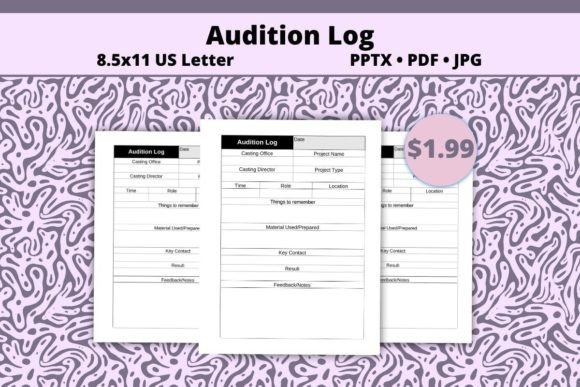
This particular Audition Log Book package is delivered as a digital toolkit, emphasizing flexibility. You receive one ZIP file containing three folders: PPTX, PDF, and JPG.
The 120-page document, formatted for the standard 8.5x11 size, is ready for upload or print. The fully editable PPTX files mean you can customize every element. Change the terminology from "Audition" to "Client Pitch" or "Job Interview." Adjust the column headers to track metrics relevant to your field—perhaps "Client Budget Range" or "Technical Panel Questions." The PDF version offers a stable, ready-to-print format for those who prefer a physical binder. The JPG folder provides individual page images, useful for importing into other design software or creating digital templates in note-taking apps.
Common Considerations Before Using a Log System
While the benefits are clear, success depends on your approach. First, consider your primary goal: Is it tracking administrative details (dates, contacts) or analytical insights (performance feedback, pattern spotting)? A good log serves both, but knowing your focus helps in customizing the template. Second, think about access. Will you update it immediately on your phone after an audition, or weekly at your desk? The digital format allows for both, but establishing a habit is key. Finally, honesty in logging is crucial. The tool is only helpful if you record accurate reflections, including perceived weaknesses. It’s a private document for growth, not a public resume.
Potential Limitations and How to Navigate Them
A log book is a tool for reflection and organization; it cannot replace preparation or talent. Its main limitation is that it relies on your consistent input and willingness to analyze the data. It won’t magically get you cast. Some users may also find a standardized template initially restrictive. This is where the editable PPTX files shine—you can modify it to feel entirely personal. Another consideration is digital versus physical. While this package provides files for both, some users thrive with a printed binder they can quickly scribble in, while others need a cloud-synced digital file. Experiment to find your fit.
From Tracking to Strategy: The Long-Term Benefit
The ultimate strength of maintaining an Audition Log Book over months or years is the transformation from simple tracker to strategic advisor. You begin to see seasonal patterns in casting, identify the types of roles where you are most competitive, and have a detailed record of your evolving skills and feedback. This data empowers conversations with agents, coaches, or mentors. You can demonstrate your activity level and learning curve with specifics, not generalizations. For the creative freelancer, it builds a history of client engagements and project scopes, invaluable for planning your service offerings and rates.
In essence, this Audition Log Book toolkit provides the structure. You provide the content. Together, they create a personalized map of your professional journey, turning every audition, pitch, or interview—regardless of outcome—into a documented step forward. The included formats give you the freedom to start immediately, whether you prefer to print, edit on your computer, or integrate the pages into your existing digital workflow. It’s a practical step toward treating your career not as a series of isolated events, but as a coherent, analyzable narrative.