The Kindergarten Alphabet Tracing Worksheet: A Practical Tool for Early Learning Success
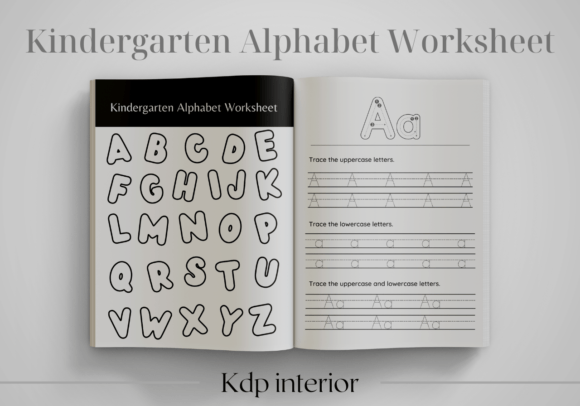
In the structured world of early childhood education and home-based learning, foundational tools are critical. The Kindergarten Alphabet Tracing Worksheet represents more than just a simple activity page; it is a core component in a deliberate process for developing literacy. For educators, parents creating homeschool resources, and KDP (Kindle Direct Publishing) entrepreneurs, this worksheet is an essential asset that integrates seamlessly into broader educational workflows. Its design—featuring both uppercase and lowercase letter writing practice—serves a specific, practical function in the sequenced journey of teaching a child to read and write.
Identifying the Role Within the Educational Process
Understanding where this tool fits requires examining the typical progression of alphabet instruction. Before a child can form letters independently, they must develop fine motor control, recognize letter shapes, and understand the connection between a symbol and its sound. The Kindergarten Alphabet Tracing Worksheet is deployed during this crucial preparatory phase. It acts as a bridge between passive recognition and active creation. A parent or educator might first introduce letter sounds and identification using flashcards or books—the "before" phase. Then, the tracing worksheet becomes the primary "during" activity, allowing for guided, hands-on practice. After successful tracing, the child progresses to freehand writing on blank paper, completing the core sequence.
This integration points to a key workflow principle: scaffolding. The worksheet provides temporary support that is gradually removed. A high-quality worksheet, like the tested 27-page PDF designed for 8.5×11 inch printing, offers a consistent, repeatable framework. This consistency reduces cognitive load for the learner and organizational overhead for the adult managing the lessons. There’s no need to search for or draw new practice sheets daily; the prepared interior is ready to use, directly supporting an efficient, repeatable routine.
Integration with Other Tools and Platforms
The utility of a standalone worksheet multiplies when considered as part of a system. For the KDP publisher or content creator, the Kindergarten Alphabet Tracing Worksheet for kids is often one component of a larger activity book or learning bundle. It might be paired with coloring pages, simple word matching exercises, or number tracing sheets to create a comprehensive preschool or kindergarten interior. This combination addresses different learning domains within a single, cohesive digital product.
From a technical workflow perspective, the provided specifications—PDF format, no bleed, high-resolution—are deliberate choices for compatibility. The PDF ensures the file renders correctly across devices and printing setups. The "No Bleed" setting is a practical decision for an activity book interior, simplifying the design process and ensuring all critical content (the tracing lines) remains well within the safe area of the page when printed via Amazon KDP or home printers. Testing the files on Amazon KDP, as noted in the product information, is a vital quality control step within the publisher’s workflow. It verifies that the digital product performs as intended on the final delivery platform, preventing customer issues and negative reviews.
Practical Implementation for Diverse Users
How different users incorporate this tool into their routines varies by role, but the underlying focus on process remains.
For the educator or parent, implementation is about lesson integration. A practical approach is to schedule tracing practice as a daily 10–15 minute session, following a phonemic awareness activity. Organization is key: having the 27-page PDF printed and filed in a binder, perhaps in alphabetical order, allows for quick retrieval. To enhance the activity, the adult can interactively name the letter and its sound as the child traces, linking the motor skill practice with auditory learning. The dual practice of uppercase and lowercase letters on the same sheet or in sequence helps children understand letter case variants early, building a more complete literacy foundation.
For the KDP entrepreneur or digital creator, the worksheet is a project output and a marketable product. The workflow begins with design or sourcing, ensuring the tracing lines are clear, the letters are formed correctly, and the page layout is clean. Following design, the process moves to formatting: setting the document to 8.5×11 inches, confirming margins are KDP-compliant, and saving as a high-resolution PDF. The final step is the aforementioned platform testing—uploading the interior to a dummy KDP project to check for any formatting warnings. This entire process ensures the final digital product is usable and reliable for the end customer, which is a cornerstone of building a trustworthy store presence and encouraging repeat business.
Factors for Long-Term Use and Quality Control
Beyond initial use, considerations like durability, adaptability, and outcomes matter. A worksheet that is part of a high-resolution PDF allows for unlimited printing. This means a parent can reprint pages if a child needs extra practice on specific letters, or if a sheet becomes worn—a factor of long-term usability. For the publisher, offering this as a digital product aligns with a sustainable workflow; the same core file can be sold indefinitely without inventory management.
Quality control is embedded in the specifications. High-resolution interiors ensure that even fine tracing lines are sharp and don’t appear pixelated when printed, which is essential for a child accurately following the path. The 27-page count provides a substantial practice resource without being overwhelming, covering the full alphabet with room for introductory and summary pages. This balanced scope is a practical observation: it offers completeness while respecting the attention span and development pace of a kindergarten-aged child.
Workflow Examples and Observations
Consider a homeschool parent planning a month-long alphabet focus. Their workflow might be:
- Week 1-2: Introduce letter groups (A-G, H-N, etc.) using songs and objects.
- Daily Activity: Use the corresponding Kindergarten Alphabet Tracing Worksheet pages for those letters.
- Follow-up: Encourage the child to find the practiced letters in a storybook later in the day.
For a blogger or educator creating supplemental content, the worksheet can be a foundational resource they recommend. Their process involves evaluating various available worksheets, selecting ones with clear tracing paths and proper letter formation (the quality control aspect), and then writing a tutorial on how to effectively use them within a balanced literacy curriculum. The worksheet becomes a recommended tool within a larger methodological framework they advocate.
Smooth Integration into Professional and Creative Routines
The ultimate goal is seamless integration. For the end-user—the adult guiding the child—having a ready-to-upload or ready-to-print file eliminates preparation friction. There’s no need to design or draw; the resource is immediately actionable. This efficiency is particularly valuable for busy parents or teachers who must allocate their time strategically between planning, instruction, and assessment.
For the creator, integrating the design of such worksheets into their content calendar or product development pipeline is a matter of recognizing market needs and pairing them with their skills. Once a template or style is established, creating variations (perhaps for different fonts or themed backgrounds) can become a streamlined process, allowing for scale. Visiting a store for more designs, as mentioned, is essentially about workflow continuity—finding compatible assets that require minimal rework to incorporate into one’s own offerings.
In both cases, the Kindergarten Alphabet Tracing Worksheet succeeds because it is a focused, process-ready tool. It doesn’t attempt to be the entire curriculum; it excels at one specific task within a larger sequence. This modularity is its strength. By providing structured, no-frill practice, it allows the adult—whether a parent, teacher, or publisher—to focus their energy on the interactive, personalized aspects of teaching or business development, while the worksheet reliably handles the fundamental practice mechanism. That is the hallmark of a tool that fits thoughtfully into a real-world workflow: it performs its job well, freeing up resources for the tasks that require deeper human engagement and creativity.