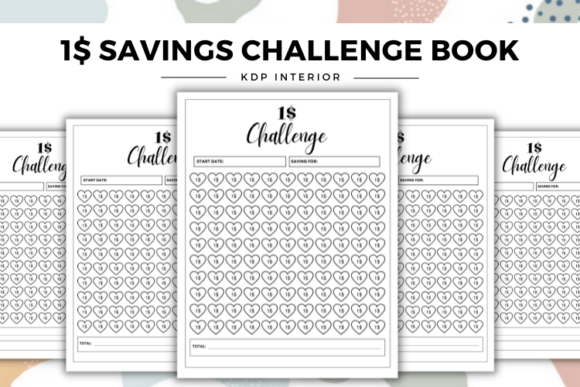
The Ultimate Savings Companion: Your Guide to the 1 Savings Challenge Book Interior
You’ve likely stumbled upon countless savings tips online, from vague advice to complex spreadsheets. But when it's time to actually track your progress, the system often falls apart. That’s where the tangible, structured approach of a 1 Savings Challenge Book Interior comes in. It’s not just a collection of pages; it’s a designed framework you can physically interact with, turning abstract financial goals into daily, manageable actions.
What Exactly Is This Savings Challenge Book Interior?
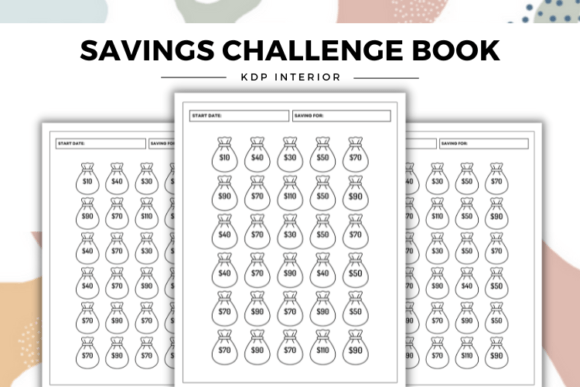
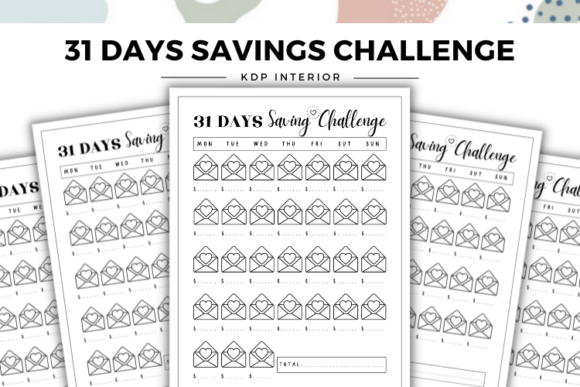
Imagine a ready-to-use workbook, formatted specifically for the popular KDP (Kindle Direct Publishing) platform or for personal printing. This interior file provides the complete 110-page layout of a savings challenge journal. It’s designed on a large 8.5 × 11 canvas, without bleed, meaning the content fits perfectly within the page borders for clean printing or digital upload. You receive it as a PDF and PNG, files you can immediately download, examine, and if you choose, edit to suit your needs before publishing or using personally. The core of it is a series of tracked challenges, progress charts, and motivational pages built to guide someone from a savings idea to a savings reality.
Where and Why This Tool Finds Its Purpose
The beauty of this resource is its flexibility across different lives and goals. For the entrepreneur or small business owner, it’s a personal finance tool to separate business cash flow from personal savings targets, perhaps for a future investment or a safety net. A freelancer facing irregular income can use the challenge pages to visually map out monthly savings goals, creating consistency where their paycheck might not. For a blogger or educator in the personal finance niche, this interior becomes a ready-made product to offer their audience—a practical extension of their content that helps followers act on their advice.
Consider a common scenario: someone wanting to save for a family vacation. They know the total cost, but the monthly discipline is hard. By printing or using a digital copy of this challenge book, they assign a page to a specific challenge, like the “52-week money challenge,” and fill it in week by week. The physical act of writing and seeing the page fill up creates a commitment loop that a note on a phone often lacks. Similarly, a marketer looking to create a lead magnet or a low-cost product for their email list can use this professional-grade interior to quickly launch a useful downloadable without starting from a blank design file.
Real-World Applications Beyond Simple Budgeting
The use cases extend far beyond individual penny-pinching. An educator running a financial literacy workshop for young adults can utilize pages from the interior as handouts or a workbook for the course, providing students with a structured take-home tool. A creator or hobbyist passionate about bullet journaling or planner design might download the PNG files to incorporate specific savings tracker layouts into their own custom planner creations. The clean, large-size format makes elements easy to adapt.
For the everyday user, perhaps someone recovering from a financial setback, the book offers a non-judgmental space to start small. Challenges often begin with minimal weekly deposits, building confidence. It’s the psychological benefit of a guided path. In a digital setting, someone might keep the PDF open on their tablet, filling it in during their monthly financial review, using it as a central document to consolidate savings progress from multiple accounts.
What to Consider Before Downloading or Using
While the files are ready for upload or print, your intention defines how you should approach them. If you are a publisher looking to sell this on KDP, you must consider your target audience and potentially tailor the interior. The editable nature of the files allows you to adjust challenge titles, add introductory pages, or modify instructions to match your brand voice. Are you addressing beginners or seasoned savers? That small edit can make the product feel uniquely yours.
If you are an individual planning to print and use it yourself, assess your actual savings goals. The 110-page length offers longevity for a year-long challenge or multiple shorter goals. Think about your tracking preference: do you enjoy daily check-ins or weekly summaries? Some pages will suit you perfectly, others you might adapt. The key is to not just download the file, but to mentally map how you’ll engage with its structure. For commercial users, like a small business offering it as a client gift, ensure the design and language align with your professional image.
Connecting Features to Real Outcomes
The 110 pages aren’t just a number; they represent depth and continuity. A user won’t “run out of space” halfway through a critical six-month savings sprint for a down payment. The 8.5 × 11 size means ample writing space for notes, calculations, and reflections alongside the core tracking—it facilitates a richer financial diary, not just a grid. The provision of both PDF and PNG files directly translates to flexibility: the PDF is your ready-to-go document, the PNGs allow for graphic editing or integration into other projects.
The fact that it’s ready for upload to KDP removes the technical barrier for creators. Instead of spending hours designing page margins and consistency, they can focus on marketing, packaging, and connecting with their audience. This shifts the effort from production to distribution and support. For the end-user who buys the finished book, the no bleed design ensures every printed copy looks crisp and professional, enhancing the perceived value and their commitment to using it.
Ultimately, the 1 Savings Challenge Book Interior serves as a bridge. It bridges the gap between financial intention and action for the individual saver. It bridges the gap between content creation and product offering for the digital entrepreneur. And it bridges the gap between a generic template and a personalized tool for anyone willing to download and engage with it. By providing a structured, aesthetic, and adaptable framework, it turns the often stressful journey of saving money into a documented, achievable challenge.