Why Every Landlord Needs a Rental Property Record Book
Running a rental property is a business, and like any successful business, it requires meticulous record-keeping. Tracking income, expenses, maintenance requests, and tenant communication can quickly become a chaotic pile of notes, digital files, and forgotten emails. A dedicated Rental Property Record Book Interior transforms this chaos into order, providing a centralized, physical hub for all your property management data.
While digital tools exist, a well-designed physical book offers unparalleled simplicity, reliability, and focus. It’s always available, doesn’t require login credentials, and forces a discipline of regular updates that scattered digital entries often lack. For the hands-on landlord, it becomes the single most important tool in their operational toolkit.
The Core Function of a Property Management Ledger
At its heart, a rental record book is a comprehensive ledger. Its primary function is to provide a clear, chronological account of every financial and logistical transaction related to your property.
Imagine trying to recall the exact date you repaired that leaky faucet two years ago, or the total amount spent on landscaping last season. Without a system, you’re relying on memory or a frantic search through old bank statements. A structured Rental Property Record Book Interior provides designated sections for these records, allowing you to instantly access historical data. This is crucial not just for day-to-day management, but for tax preparation, performance analysis, and even resolving disputes with tenants.
Key Sections Every Effective Book Should Have
A generic notebook isn’t enough. An effective interior is thoughtfully formatted to prompt you for the specific information you need to record. Common and essential sections include:
- Tenant Information Pages: Dedicated spaces for lease terms, contact details, security deposit records, and move-in/move-out conditions.
- Monthly Income Trackers: Simple tables to log rent payments, including date, method, and any late fees or partial payments.
- Expense Logs: Categories for maintenance, repairs, utilities, insurance, property taxes, and improvements. Recording expenses here, as they happen, makes annual tax filing a straightforward process.
- Maintenance & Repair Logs: Perhaps the most valuable section. Details of every service request, the action taken, the cost, and the contractor used. This creates a valuable history of the property’s condition and upkeep.
- Communication Notes: A place to briefly note phone calls, emails, or meetings with tenants regarding non-urgent matters. This provides context and a timeline for any ongoing issues.
A professionally designed Rental Property Record Book Interior integrates all these sections into a cohesive, easy-to-navigate format.
Fitting Into the Modern Landlord’s Workflow
In an era of property management apps and software, the role of a physical book is often misunderstood. It doesn’t necessarily replace digital tools; it complements them. Many landlords find a hybrid system works best: using apps for immediate communication and payment collection, but relying on the physical record book as the permanent, master archive.
The act of writing information down physically reinforces memory and commitment. It also serves as a backup. Digital systems can fail, accounts can be hacked, or subscriptions can lapse. Your record book, sitting on your desk or shelf, is immune to these risks. For many, it’s the cornerstone of a simplified, stress-reducing workflow. You know exactly where your information is, and the format of the Rental Property Record Book Interior guides you through the process of keeping it complete.
Practical Benefits Beyond Organization
The benefits extend far beyond neat filing. First, it professionalizes your operation. Presenting a tenant with a clear, written record of a repair or deposit handling builds trust and demonstrates your seriousness as a property owner. Second, it saves significant time and money. Organized records mean you can quickly reference vendor contacts, warranty periods, or recurring seasonal expenses. During tax season, your accountant won’t need to sift through random receipts—they’ll have a clear log to work from.
Furthermore, if you ever decide to sell the property, a well-maintained record book becomes a powerful asset. It shows potential buyers a history of responsible, diligent management and systematic upkeep, which can positively influence the property’s valuation.
Choosing the Right Record Book for Your Business
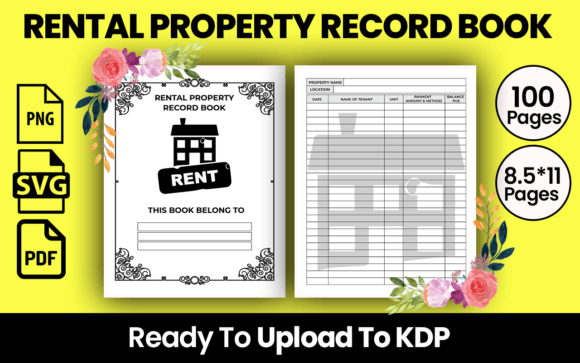
Not all record books are created equal. When selecting or creating one, landlords should consider several factors. The number of properties you manage is paramount. A single-property owner might need a simpler, 100-page book, while a portfolio landlord will benefit from a more robust 120-page version with capacity for multiple tenant logs.
The physical design and quality are also critical. The book should be durable, with paper that handles pen and ink well. The layout should be intuitive, with clear headings and ample writing space. Many modern Rental Property Record Book Interior designs are created specifically for the self-publishing market, meaning they are “KDP tested” and formatted for professional printing at standard trim sizes like 8.5" x 11".
This ensures the final product looks and feels like a professional business tool, not a homemade notebook. Features like high-quality 300 PPI resolution and CMYK color formatting mean the printed pages are sharp, clear, and easy to read, which enhances the user experience day after day.
Ready-to-Use Solutions for Low-Content Publishing
For entrepreneurs in the low or no-content publishing space, such as on Amazon KDP, a pre-formatted Rental Property Record Book Interior is a perfect product. These interiors are designed to be “ready to upload,” eliminating the complex design and technical work. They often come as a package including multiple PDF files for different page counts (like 100, 110, and 120 pages), giving sellers flexibility to offer variants.
Additional source files like PPT, AI, or PNG files provide value for those who might want to make minor customizations, though the core PDFs are typically print-ready. This turnkey approach allows a seller to focus on marketing and sales, providing landlords with a tool they genuinely need, without investing in graphic design or formatting expertise.
Implementing Your Record System
Once you have your book, the key is consistency. Make it a habit to update it immediately after any property-related event: when rent is received, when a plumber finishes a job, after a tenant inspection. Treat it as the official log of your business.
Start by filling out the permanent information: property address, your contact details, and any mortgage or insurance information. Then, use it dynamically. Don’t worry about making it perfectly neat—it’s a working document. Its value comes from the information inside, not pristine handwriting.
Observing your own property management through the disciplined use of a Rental Property Record Book Interior often leads to insights. You might notice patterns in maintenance costs, identify a particularly reliable vendor, or see how seasonal changes affect your expenses. This book becomes more than a log; it becomes a strategic tool for improving your rental business's profitability and efficiency.
In essence, it brings the foundational principle of any good business—organized record-keeping—into the hands of every landlord, from the first-time owner to the seasoned portfolio manager. It turns management from a reactive task into a proactive, controlled operation.