Navigating the Path: An Exploration of 9x9 Line Segment Logic Puzzles
The world of logic puzzles offers a vast landscape of mental challenges, from classic Sudoku to intricate nonograms. Among these, Line Segment Logic Puzzles stand out for their unique blend of spatial reasoning and deductive logic. Specifically, the 9x9 grid format, particularly in an easy difficulty setting, provides an accessible yet deeply engaging entry point. This format is increasingly popular for KDP interior content, printable puzzle books, and digital resources, offering creators a versatile product and solvers a satisfying cognitive exercise.
Core Mechanics and Solving Principles
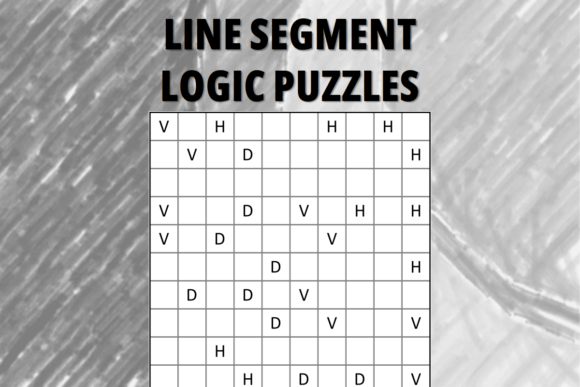
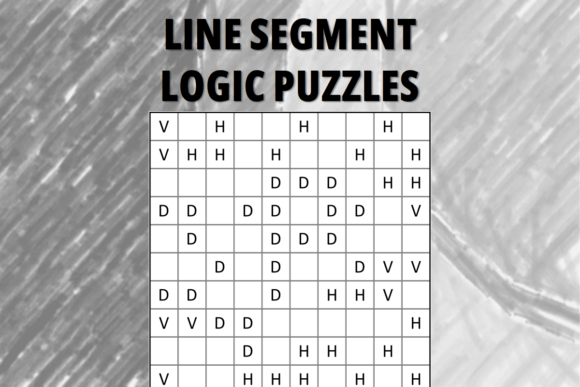
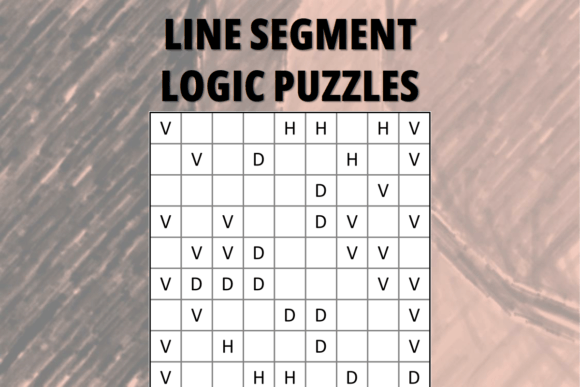
A Line Segment Logic Puzzle presents a grid, typically 9x9, where each cell contains a number. The solver's objective is not to place numbers but to draw line segments according to a set of specific constraints. The fundamental rules are: draw several line segments in each rectangle that travel through precisely three or four consecutive squares; only horizontal (H), vertical (V), or diagonal (D) line segments are permitted; each square in the grid must have exactly one line segment passing through it; and crucially, a square that contains a letter (H, V, or D) must be part of a segment that has that exact orientation.
This last rule is the key to unlocking the puzzle. It provides direct clues. For example, a cell marked 'H' forces you to find a horizontal line of three or four cells that includes that square. This starting point then radiates constraints to neighboring cells, as you must ensure every cell is served by one segment and no overlaps or gaps occur. The 9x9 size is optimal for easy puzzles, as it provides enough space for multiple interacting segments without becoming overwhelmingly complex at the introductory level.
The Appeal of the Easy 9x9 Format
Why does the "easy" designation matter? For a broad audience including hobbyists, educators, and casual consumers, an approachable difficulty is vital. An easy 9x9 logic puzzle allows learners to internalize the rules without frustration. It focuses on understanding the propagation of constraints. You learn how placing a horizontal segment across four cells automatically determines the state of those cells and limits possibilities for adjacent rows. This foundational practice is essential before tackling more complex variants where segments of different lengths might mix or grids expand.
From a creator's perspective, such as those designing for KDP, a collection of 50 puzzles at a consistent easy level offers a cohesive product. Users gain confidence and a sense of progression without sudden spikes in difficulty. The puzzles are solvable in a reasonable time frame, making them perfect for short mental breaks, educational settings, or leisurely hobby time.
Real-World Applications and User Relevance
While fundamentally a recreational activity, the skills honed by solving these puzzles have tangible real-world relevance. The core skill is constrained spatial planning. You must allocate resources (line segments) to cover an entire area (the grid) while obeying local rules (the letter clues). This mirrors problems in logistics, scheduling, or even simple layout design. Professionals in fields requiring systematic thinking may find these puzzles a refreshing way to keep their deductive muscles sharp.
Educators and researchers see value in such puzzles for developing logical thinking in students. The 9x9 easy grid is a fantastic classroom tool or homework assignment. It requires no prior specialized knowledge, only clear reading and logical deduction. It demonstrates how a single fixed point (the lettered cell) can determine the structure of a larger system. For hobbyists and puzzle enthusiasts, the clean logic and satisfying "click" of a solved grid provide the same appeal as any well-designed logic game.
Characteristics for Creators and Business Use
For creators, publishers, and business owners looking to produce puzzle content, the technical specifications like SVG file format and 8072 px quality are significant. SVG ensures scalability; puzzles can be rendered at high resolution for print books without losing clarity, which is essential for KDP interiors where image quality directly impacts customer satisfaction. The high pixel count guarantees that even fine lines and letters appear sharp in both digital and physical formats.
The structure of these puzzles also offers business advantages. Each puzzle has its own unique answer, meaning a collection of 50 is genuinely 50 distinct challenges, not repetitions. This adds genuine value to a product. Furthermore, the easy difficulty broadens the market, making the puzzles suitable for children, older adults, or anyone new to logic puzzles, thereby increasing potential audience reach.
Observations on Solving Strategy and Flow
A natural solving flow emerges with practice. Start by identifying all lettered cells (H, V, D). These are your anchors. For each, mentally project the possible three or four-cell segments that could include that square. Often, especially in easy puzzles, the orientation and the grid boundaries will reduce this to only one or two possibilities. Then, consider the ripple effect. Placing a segment claims those cells. Adjacent cells now need segments, but they cannot be claimed by the already-placed one. This creates a cascading logic chain.
One might observe that diagonal segments in a 9x9 grid can be particularly interesting as they cross row and column boundaries, creating interaction between different regions of the puzzle. Easy puzzles often use diagonals sparingly or in clear isolation to teach this concept without confusion. The consistent requirement that every cell gets exactly one segment is the global constraint that ultimately ties the whole solution together, checking your work for completeness.
In conclusion, whether you are a solver seeking a stimulating pastime, an educator looking for a teaching tool, or a creator exploring content for KDP, the Line Segment Logic Puzzles 9x9 - Easy format represents a well-balanced, accessible, and intellectually rewarding domain. Its clear rules, focused constraints, and scalable presentation make it a standout choice in the landscape of logic puzzles.