Understanding Medium Difficulty Line Segment Puzzles: The 10x10 Grid
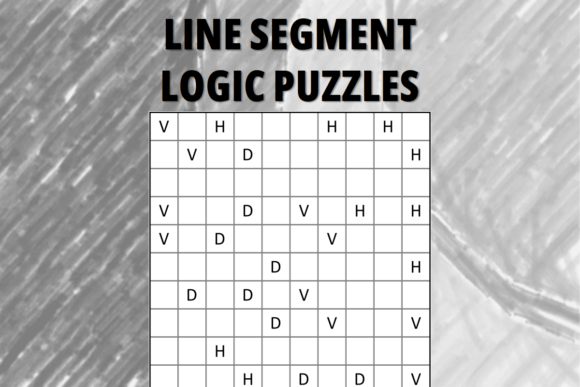
Logic puzzles come in many forms, each offering a distinct mental challenge. Among these, Line Segment Logic Puzzles 10x10 -Medium represents a specific and engaging category. These puzzles are presented on a ten-by-ten grid, with each cell containing a number. The solver's objective is not to paint out cells, but rather to draw line segments according to a set of precise constraints. This creates a structured problem-solving experience that differs significantly from more common puzzle types like Sudoku or crosswords.
What Distinguishes This Puzzle Format
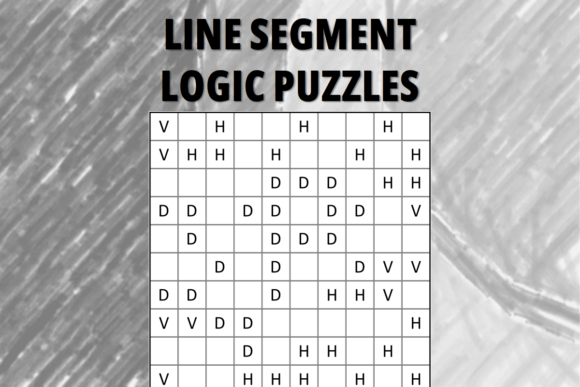
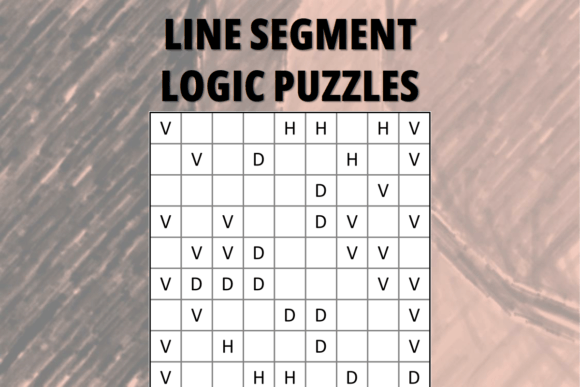
The core mechanics of Line Segment Logic Puzzles 10x10 -Medium are defined by five clear rules. First, you must draw several line segments in each rectangle that travel through precisely three or four consecutive squares. Second, only horizontal (H), vertical (V), or diagonal (D) line segments are permitted. Third, and crucially, each square in the entire 10x10 grid must have exactly one line segment passing through it. Fourth, any square containing a letter—H, V, or D—must be part of a segment that matches that orientation. Finally, each puzzle has a single, unique solution.
This structure creates a logic challenge that blends deduction, spatial reasoning, and pattern recognition. The medium difficulty designation suggests a balance: the puzzles are accessible enough not to be intimidating but complex enough to require sustained focus and logical deduction, avoiding the triviality of simpler puzzles or the overwhelming complexity of expert-level grids. The 10x10 size offers a substantial playing field without being excessively large, making it a satisfying intermediate format.
Comparing Puzzle Styles and Cognitive Benefits
When evaluating puzzle options, it's helpful to consider the type of mental exercise they provide. Compared to number-based puzzles like Sudoku, which heavily rely on combinatorial logic within a fixed set of digits, Line Segment Logic Puzzles 10x10 -Medium introduces a geometric component. You are not just filling in numbers; you are constructing a connected network of lines across the grid. This engages spatial visualization skills alongside pure logic.
Against path-drawing puzzles like slitherlink or those involving loops, the line segment format has a key difference: every square must be used exactly once. This "complete coverage" rule eliminates the possibility of leaving empty spaces, forcing a more holistic approach from the start. The constraint that segments must be exactly three or four squares long adds a layer of numerical planning. You must constantly consider how to partition the 100 squares into these specific-length segments, a task akin to a tiling problem but with directional constraints from the letter clues.
Practical Formats and Use Cases
The specification of SVG format and 8072 pixel quality highlights a production-ready digital asset, suitable for high-resolution printing or digital publication. This makes Line Segment Logic Puzzles 10x10 -Medium particularly relevant for creators designing puzzle books for Kindle Direct Publishing (KDP) or other platforms, or for educators and publishers needing crisp, scalable images. The collection of 50 puzzles offers substantial volume for a book interior or a curated digital pack.
For the individual solver, this format is ideal for dedicated puzzle sessions. The 10x10 grid size and medium difficulty mean a single puzzle can provide 15 to 30 minutes of engaging activity, perfect for a mental break during a workday or a relaxing evening challenge. It lacks the quick-solve nature of a mini-puzzle, positioning it as a deeper, more immersive experience than a casual mobile game.
Evaluating Strengths and Potential Tradeoffs
A primary strength of this puzzle format is its clarity and rule-based structure. The constraints are unambiguous, which allows solvers to apply deductive reasoning systematically. The presence of letter clues (H, V, D) provides direct starting points, guiding the initial placement without giving away the entire solution. This makes the medium difficulty well-suited for learners progressing from easier puzzles or for those who enjoy a methodical, step-by-step solving process.
However, this structured nature also presents a tradeoff. Unlike more open-ended creative puzzles, the path to the solution is tightly channeled by the rules. Some solvers who prefer greater ambiguity or multiple solving strategies might find this format less appealing. The focus on exact segment lengths (3 or 4) can also feel restrictive compared to puzzles that allow variable lengths. This isn't a flaw, but a defining characteristic that influences user preference.
The 10x10 grid is a significant factor. It provides enough complexity for interesting deductions but may feel repetitive over 50 puzzles if the puzzle designs do not introduce varied clue patterns or unique challenges. The quality of the puzzle set thus depends heavily on the design and distribution of the letter clues across the grid to create genuinely distinct solving experiences for each puzzle.
When This Puzzle Is the Right Choice
Line Segment Logic Puzzles 10x10 -Medium is an excellent choice for several scenarios. For puzzle enthusiasts looking to expand their repertoire beyond classic number grids, it offers a fresh challenge that uses familiar logic skills in a new way. For publishers and content creators, the specified SVG format and professional quality make it a practical, ready-to-use resource for book interiors or digital products.
It is also a strong fit for solvers who appreciate puzzles with a clear "right answer." The guarantee of a unique solution provides a concrete goal and a sense of definitive accomplishment upon completion. The medium difficulty level makes it suitable for regular practice, helping to build and maintain logical and spatial reasoning skills without the frustration that can come from overly difficult puzzles.
Considering Alternatives and Decision Factors
If the core mechanics don't align with a solver's preferences, there are natural alternatives within the logic puzzle spectrum. For those who enjoy the spatial element but want more freedom, area-division puzzles or irregular polygon placement puzzles might be preferable. For individuals solely interested in numeric deduction, variants of Sudoku or nonogram (picture-cross) puzzles would be a closer match.
Key decision factors for choosing this puzzle format include your tolerance for geometric constraints, your desire for a puzzle with a "complete coverage" requirement, and your preference for a medium-length solving session. The technical specifications of the file format and resolution are critical decision points for creators, as SVG files offer scalability but require compatibility with their publishing software.
Ultimately, Line Segment Logic Puzzles 10x10 -Medium occupies a specific niche. It is not the most common puzzle, which can be a benefit for those seeking novelty. Its balanced difficulty and structured rules provide a reliable and satisfying challenge. By understanding its distinct mechanics and comparing them to the broader landscape of logic puzzles, you can make an informed decision about whether this format meets your needs for entertainment, cognitive exercise, or content creation.